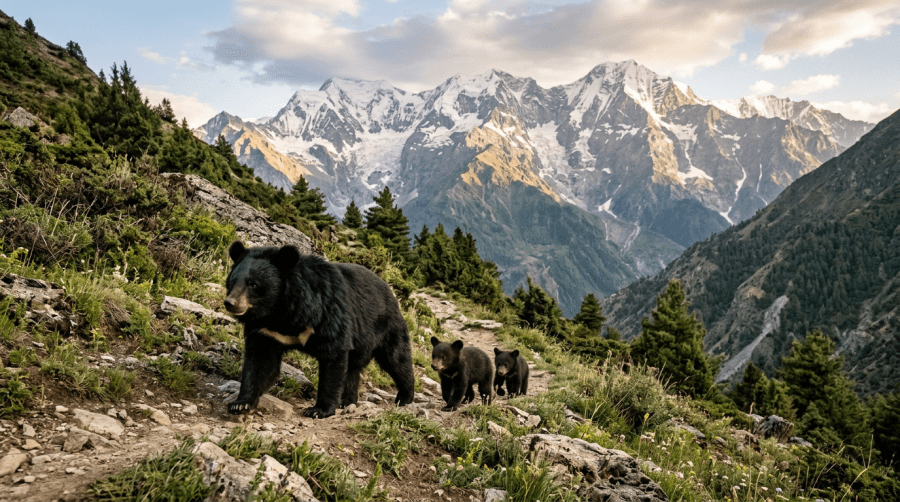
A global status report on one of Asia’s most vulnerable and most exploited species
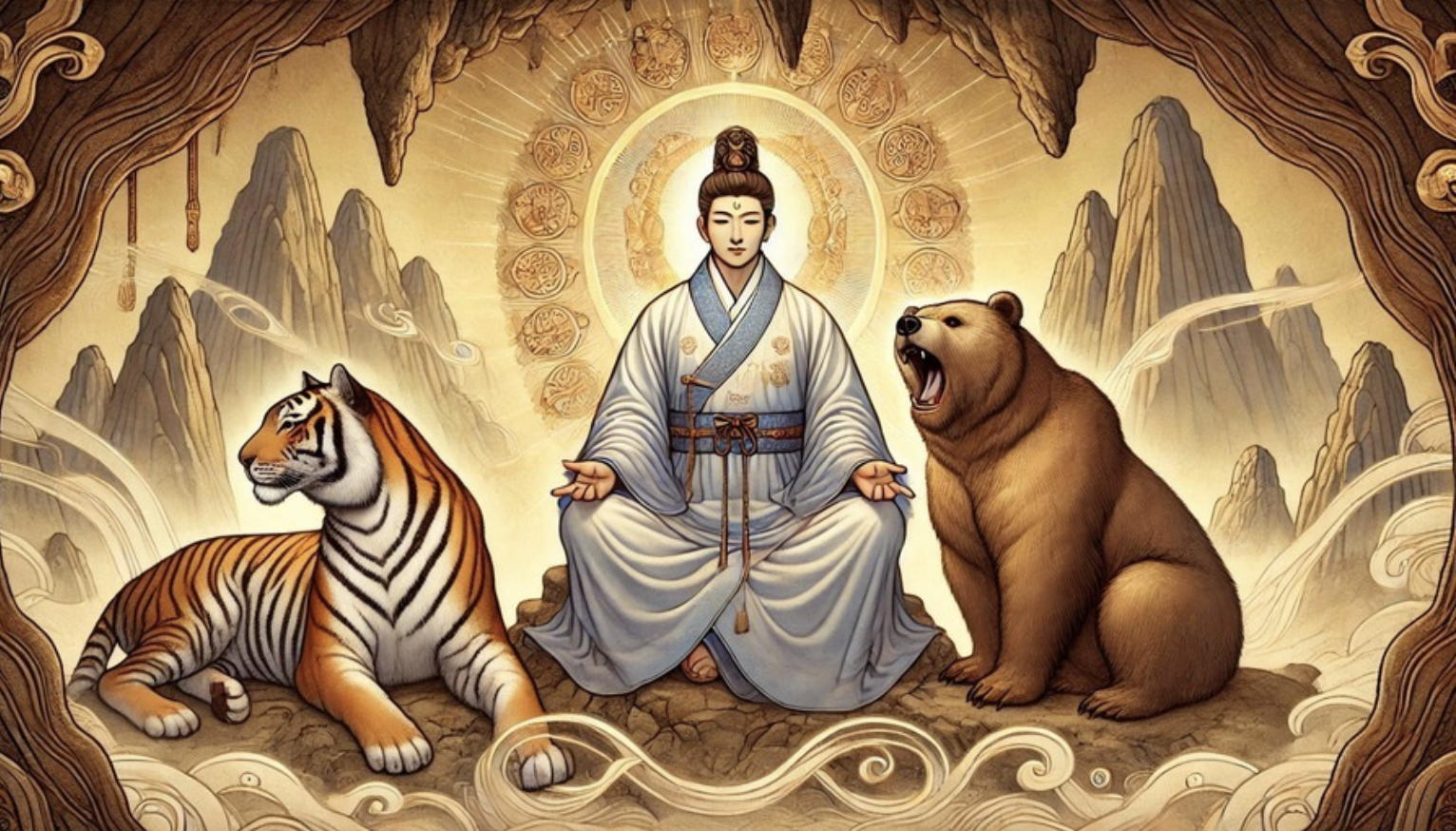
The moon bear: named for the pale crescent of fur on its chest, Ursus thibetanus is among the most recognizable and charismatic animals in Asia, and one of the most persecuted. To the Korean people, the bear is something far more than wildlife. According to myth, a bear who endured trials of patience and faith was transformed into a woman named Ungnyeo, who became the mother of Dangun, the legendary founder of Korea itself. hat a nation whose origin story flows from the bear is among the last to have cruelly farmed them for bile is one of history’s more painful ironies, and makes South Korea’s landmark ban in 2026 all the more meaningful.
Today, Korea’s mythological mother is an embattled species, often painfully languishing in small crush cages so that their bile can be harvested for use in Traditional Chinese Medicine (TCM). The practice persists despite the existence of over 50 herbal alternatives that can successfully substitute for bear bile, and despite the fact that UDCA, the compound most prized in bear bile, can be synthesized safely and effectively in a laboratory. Compounding the cruelty, bile harvested on farms is frequently riddled with pus and bacteria due to unsanitary conditions and the poor health of the bears themselves. Yet a persistent consumer desire for authenticity continues to drive the trade.
Rough estimates suggest fewer than 60,000 moon bears remain worldwide, and the IUCN currently lists the species as “Vulnerable”, with populations decreasing across its range. The threats driving that decline—bear bile farming, deforestation, and human-wildlife conflict, haven’t disappeared. But in 2026, there is hard-earned news worth acknowledging.
A Foundation Built in 2012
In 2012, the IUCN passed Resolution WCC-2012-Rec-139 at the World Conservation Congress, an overwhelmingly approved mandate calling on nations, particularly China, Vietnam, and South Korea, to actively phase out bear bile farming, promote synthetic and herbal alternatives for use in Traditional Chinese Medicine (TCM), and strengthen wild population monitoring and anti-poaching measures. IUCN Bear Specialist Group Co-Chair Dave Garshelis led a multi-organizational effort that resulted in all signatory countries except China committing to what many advocates called “the beginning of the end of industrial bear farming”. It was a landmark moment, and the policy changes unfolding today trace directly back to it.
🇰🇷 South Korea: A Historic Victory
The biggest news of early 2026 belongs to South Korea. As of January 1, 2026, South Korea officially ended its bear bile industry, a practice that had been in place since the early 1980s. The Ministry of Climate, Energy and Environment confirmed that breeding, ownership, and bile extraction of bears are now strictly prohibited, with penalties of two to five years in prison for violations.
The ban stems from a broader 2022 agreement among officials, farmers, and animal rights campaigners. Demand for bear bile had dropped sharply over the preceding two decades, driven by growing skepticism over its medical effectiveness, the availability of affordable synthetic alternatives, and rising public concern over animal cruelty. The work is far from finished, though. While some bears have been relocated to government-built or NGO-operated sanctuaries, a shortage of facilities capable of accommodating the remaining rescued bears means further measures are still needed to ensure all remaining bears can live out their lives safely and with dignity.
STORY: Bear farm in Korea, A visitor’s account with photos sent to us by a concerned citizen who happned by a bear bile farm while traveling the countryside.
No Korean Sanctuary
Unlike neighboring China and Vietnam, South Korea currently lacks large-scale established sanctuaries, so organizations including Project Moon Bear, a South Korean nonprofit dedicated to rescuing captive moon bears and establishing the country’s first bear sanctuary, and the Korean Animal Welfare Association (KAWA) are working urgently to fill that gap. Because sanctuary space remains limited, some rescued bears have even been flown from Seoul to large natural habitats in the United States, including The Wild Animal Sanctuary in Colorado, where they can finally roam on open land. South Korea’s ban sets a powerful precedent, and advocates hope it becomes a model for the rest of Asia.
🎬 For a look at what life is like for moon bears transitioning from captivity into expansive, natural habitats, visit this page on Facebook.
🇻🇳 Vietnam: The Final Hurdle
Enter Jill Robinson, Founder and CEO of Animals Asia — a woman who, in the words of Peter Li, associate professor at the University of Houston-Downtown and a longtime researcher on China’s animal welfare policy, “single-handedly alerted the world” to the cruel practice of bear farming.
Vietnam represents perhaps the most striking example of what sustained advocacy can achieve, and conversely, how close “finished” can still be from done. The country outlawed wild bear bile extraction in 2005, and a landmark partnership between the government and conservation organization Animals Asia has since been working to empty all farms. The captive population has shrunk by more than 94% — from roughly 4,300 bears down to a few hundred — yet a small number remain trapped in private households or hidden farms, largely because some owners refuse to surrender them without illegal compensation. Sanctuaries like the Vietnam Bear Rescue Centre in Tam Dao continue working to reach the final survivors.
FUN FACT Animals Asia offers bi-monthly guided tours
🇨🇳 China: The Unresolved Center
China may be the most complicated and consequential piece of the proverbial puzzle. As the industry continues to be entirely legal, it is estimated that over 20,000 Asian black bears are currently farmed for their bile and body parts in China. Bears are confined in industrial-scale facilities, often for decades, subjected to painful, daily bile extractions.
In the wild, the bears face compounding threats: logging, infrastructure expansion, and agricultural encroachment fragment their habitat, while snaring and poaching for bear paws and gallbladders continue. Wild bear populations are rebounding in places like Sichuan, which is a positive sign, though this growth also brings more frequent encounters between bears and people. Organizations like Animals Asia are piloting humane deterrents and community-based coexistence programs, while also working with hospitals, researchers, and traditional medicine practitioners to promote synthetic alternatives to bear bile. Recent innovations support the production of synthetic bio-transformed bile, a mirror image of real bear bile, seen as a vital step toward ethical and sustainable medicine. Progress exists, yet systemic change remains elusive.
🇱🇦🇲🇲 Laos, Myanmar & Southeast Asia: The Enforcement Gap
In much of Southeast Asia, legal ambiguity and weak enforcement create a brutal reality for moon bears. Although bear bile extraction is technically illegal in countries like Laos, underground farms operate with minimal threat of prosecution. Perhaps more damaging in the long term is what conservationists call “empty forest syndrome,” where forests across Laos and Myanmar are being stripped of wildlife not by chainsaws but by wire snares set indiscriminately by poachers, decimating wild bear populations to feed the illegal cross-border wildlife trade into China. Organizations like Free the Bears manage rescue sanctuaries in these regions, caring for cubs confiscated from poachers, but the scale of the crisis continues to outpace the capacity to respond.
🇯🇵 Japan: A Different Kind of Crisis
Japan presents a rare exception to regional population decline, and a cautionary tale about what happens when human-wildlife balance tips the other way. The country’s native subspecies population is stable or growing, instigating a collision with human communities. Rural depopulation has allowed abandoned farmland to revert to forest, drawing bears closer to cities. With natural food sources in the mountains increasingly unreliable, Japan recorded an unprecedented spike in bear sightings and human encounters in 2025, leading to record-breaking culls and captures. The challenge here isn’t extinction — it’s coexistence.
⭐🐻⭐ Where Things Stand ⭐🐻⭐
The moon bear’s story in 2026 is one of incremental, hard-fought progress shadowed by enormous remaining challenges. South Korea’s ban is a genuine victory; the product of years of coordinated advocacy that included both grassroots and global NGO efforts. Vietnam is nearly across the finish line. In Laos and Myanmar, the enforcement gap persists and the wire snares keep coming, while sanctuaries struggle to keep pace with the animals that desperately need them. Japan faces a crisis of a different kind entirely, where a recovering bear population and shrinking rural human presence have set the stage for an escalating conflict with no easy resolution. Meanwhile, China’s industry remains intact, Southeast Asia’s enforcement crisis continues, and across the species’ entire range, habitat loss accelerates.
The thread connecting all of it—from the 2012 IUCN resolution to today’s sanctuary flights from Seoul to Colorado—is the stubborn, unglamorous work of advocates who refused to accept that captivity and exploitation were simply the moon bear’s fate. That work continues.
 SAVING BEARS...